Production & Manufacturing
Footwear MOQ Explained: How Many Pairs Should Your Brand Produce?
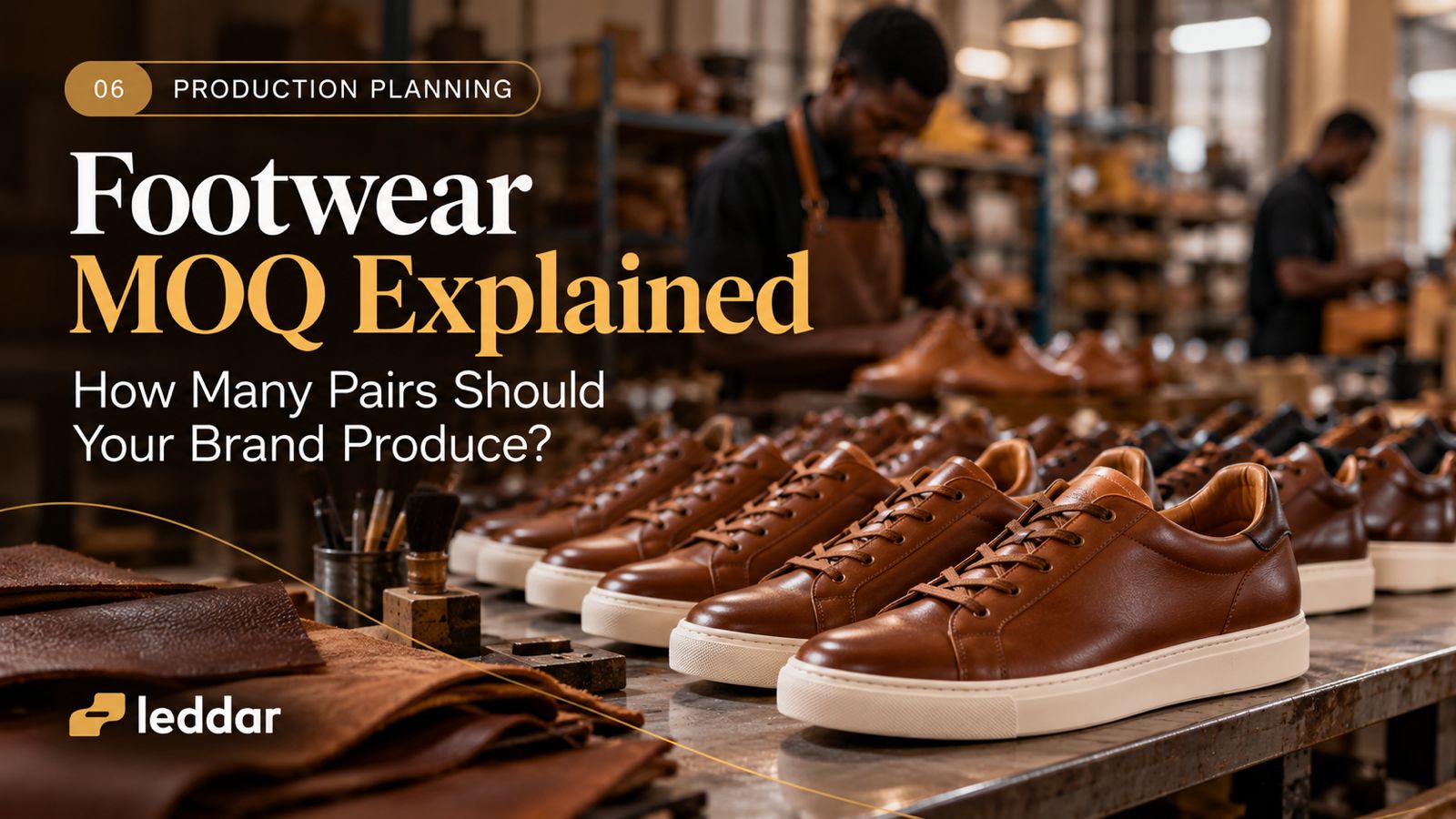
If you are searching for footwear MOQ, the real question is usually bigger than the keyword itself. You are trying to make a production decision with less risk: who to work with, what to prepare, what to approve and how to protect quality, time and cash. This guide breaks the decision into practical steps for an emerging or growing brand, with a focus on what matters before money is committed to production.
What MOQ actually means
MOQ is the smallest order a production partner can accept under a defined product specification. It may apply per style, per colour, per material or across an order. Brands should always ask what the quoted MOQ actually covers.
Why manufacturers set minimums
Production requires setup, pattern preparation, cutting plans, material purchases, component sourcing, labour scheduling and quality checks. Many suppliers of leather, soles, boxes and hardware also have their own minimums. The maker must combine these constraints into a commercially workable batch.
When a lower MOQ is useful
Lower minimums are valuable when a brand is validating a new product, testing demand or launching with limited capital. The trade-off may be a higher unit cost, fewer custom components or a narrower colour range. That can still be the right choice if it reduces inventory risk.
How to choose your first quantity
Estimate realistic demand, selling period, cash available, size distribution and reorder speed. Separate what you hope to sell from what you can reasonably move. For an early brand, the ability to reorder a winning style can be more valuable than producing a large first batch.
Questions to ask about MOQ
Ask whether the minimum is per style or total order, whether colours can be mixed, how sizes can be split, whether custom soles or hardware change the minimum, and what happens if a material supplier requires more material than the finished product quantity needs.
Use MOQ as a planning tool
MOQ should help you structure a commercially sensible production run. Treat it as one part of the decision alongside quality, margin, launch timing and the speed at which the production partner can replenish inventory.
Practical checklist for How Many Pairs Should Your Brand Produce
- 1.Define product category and target customer.
- 2.Confirm design or reference, materials and quantity.
- 3.Use a paid sample before bulk production.
- 4.Document corrections and final approval.
- 5.Confirm price, timeline, quality standard and payment milestones.
- 6.Keep one approved version of the production specification.
What this means for a brand using LEDDAR
LEDDAR is positioned around structured, accountable production. The platform should not replace the decisions above with blind automation; it should make them easier to manage by helping brands move from a clear brief to suitable production partners, documented approvals, production visibility and a controlled path to delivery.
Next step
Use LEDDAR to assess whether your intended quantity is commercially workable before committing to a production run.
Start a Production Request